
Safety Tips To Remember When Paddling Among Mangroves
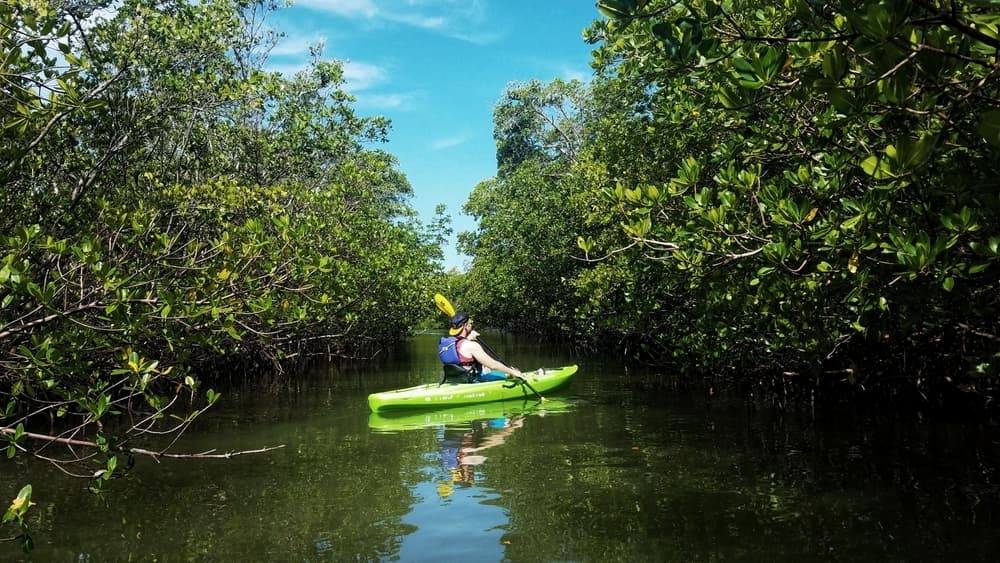
Paddling through a forest of mangroves is a thrilling experience every paddler should try at least once. Mangroves are fascinating and threatened habitats found in various tropical locations, and paddling is often the best way to explore them.
Whether you want to get up close to fascinating wildlife or immerse yourself in these wetland habitats, you must take proper precautions to stay safe when you venture into mangroves in a paddling vessel.
To stay safe while paddling through a mangrove forest, you must be aware of tides and potentially dangerous wildlife, and remember to pack all your safety essentials. Never paddle alone, and consider taking a guided tour in unfamiliar areas. Leave a float plan, bring a reliable GPS, and a communication device. Paddle in the morning rather than the afternoon whenever possible, and avoid venturing into these wetland habitats when it is raining.
Exploring a vast mangrove forest in a paddling vessel is an enchanting experience and a feast for the senses. While it requires only a beginner’s level of paddling skill, there are many potential safety concerns you must address before embarking on a trip into one of these habitats.
What Makes Paddling In Mangroves Unique?
Paddling among mangroves is very different from exploring coastal waters, wide rivers, and large lakes. To best know how to stay safe and have an enjoyable time paddling through mangroves, you first must understand the top ways that paddling in this ecosystem is different from other paddling environments.
Allows For Intimate Interactions With Wildlife: Kayaking, canoeing, and SUP boarding through mangroves bring you deep into the wilderness. You are often just a few feet from land, and many mangrove forests are protected wildlife preserves. This makes encounters with rare wildlife fairly common.
Provides Maze-like Paddling Routes: Unlike coastal and river paddling, which involve straightforward, linear routes, a trip through mangroves is a choose-your-own-adventure journey. They are a maze of winding and interconnected waterways that diverge and reconnect in thousands of places.
They Are Sheltered And Hidden Waterways: Water in mangrove forests is rarely choppy. While there are currents and tides, the water is sheltered, and the trees themselves can even form a canopy above.
It’s A Slow-Paced And Immersive Paddling: Mangrove paddling is usually slow and casual. You rarely race through mangroves. Instead, you slowly glide through the twisting waters, immersing yourself in nature everywhere you turn.
11 Safety Tips To Remember When Paddling Among Mangroves
1. Know The Tides And How They Affect Your Route
Tides have a profound impact on the safety of paddling among mangroves. As tides change, currents can form out of nowhere. As the tide shifts from high to low, certain waterways can become landlocked, and you can become trapped until the tide shifts.
You must always check the tides before paddling and understand how the changing tides will alter your route. Whenever possible, opt to swim at slack tide, when the current is at its least.
2. Wear Your PFD
Paddling among mangroves isn’t particularly physically challenging, but the protruding branches and hidden roots make it easy to capsize. You should always wear your PFD, and it’s even more important to do so when you explore waterways with so many hazards.
A PFD will make it much easier for you to reenter your paddling vessel if you fall out of your boat.
3. Be Aware Of Potentially Dangerous Wildlife
One of the top reasons to paddle among mangroves is the chance to get up close and personal with elusive wildlife. While many animals are harmless and timid, there are several dangerous creatures you need to watch out for in mangroves.
Most notably, mangroves are home to dangerous alligators and crocodiles in some regions. You want to keep a very safe distance from these animals. Mangroves may also have snakes. Snakes can even hang from branches, so you must look carefully where you are heading and avoid low-hanging branches.
4. Bring Ample Food, Water, And First Aid Supplies
Exploring mangroves can turn into a longer paddle than you anticipate. Whether you are spending extra time enjoying nature or find yourself a bit lost, a two-hour paddle can turn into a five-hour paddle more often than you’d think.
Always pack plenty of water and ample healthy paddling snacks for your journey. This ensures that even if you get turned around, you’ll have enough sustenance. Never forget to pack first-aid equipment in a dry bag, as cuts and scrapes can occur when paddling through a mangrove jungle.
5. Never Paddle In Mangroves Alone
It’s always a good idea to paddle with a buddy. It’s imperative you bring a buddy when you paddle in mangroves you aren’t familiar with. Mangrove forests aren’t like other paddling routes, where there’s ample shoreline and help nearby.
Instead, these tree-filled waterways are usually in the middle of protected lands, with nothing but wilderness as far as the eye can see. Paddling with a buddy is safer and increases your odds of finding your way back to your route if you get lost.
6. Bring A Guide When Paddling Deep Into Mangroves
If you are interested in exploring deep inside a mangrove forest and nature preserve, you should go with a guide. Waterways in mangrove forests are serpentine, and they all look alike. It’s easier to get lost than it is to find your way back to safety.
Paddling with an experienced guide ensures you have a magical experience deep inside the forest without the risk of getting lost in the wilderness.
7. File A Detailed Float Plan
Since there is a risk of getting lost within the mangroves, you must file a float plan before you venture out. Detail your route and when you plan to launch and return. When you file a detailed plan, it ensures emergency services will come looking for you if you aren’t back on time.
8. Always Carry A Reliable GPS
A GPS can come in handy, and even save your life, when you get lost paddling in a vast mangrove forest. Bringing a device with reliable GPS might seem like overkill on a casual coastal paddle, but it can steer you out of danger when you’re lost in a mangrove forest.
9. Bring An Emergency Contact Device
While cell phones work in some regions, vast mangrove forests might be dead zones for many wireless carriers. Instead of relying solely on a cell phone signal, consider bringing a handheld VHF radio. These devices can help you reach emergency services if you are lost or need help getting out of a mangrove forest.
10. Opt For Morning Paddles Whenever Possible
Since there’s always a possibility your paddling adventure into mangroves may last longer than you anticipate, an early start time is a good idea. Not only will a morning start prevent you from having to paddle when it’s dark, but it’s a great way to avoid the hottest part of the day.
Mangrove forests are humid and sticky, and the lack of breeze will make you sweat more than you would on open water.
11. Avoid Rainy And Windy Days
As with any paddling journey, calm, pleasant weather is always better than the alternative. Before you venture into mangroves in a paddling vessel, you must check the weather. Avoid windy days, and never paddle in mangroves when there's moderate to heavy rain and wind.
Rain and wind can increase the current and increase the number of hidden hazards in the water.
Related Articles

Canoeing in the spring is one of the most meditative and peaceful experiences you can have on the…

Razor’s Edge Pro series doesn’t just improve upon the inflatable kayak – it resets expectations. It…

SUP boarding is the perfect summer beach day activity, but it’s also a watersport you can enjoy in…

With its accessible price point and strong Amazon presence, Niphean inflatable SUPs are often grouped…