
Spring SUP Boarding Safety Tips To Remember
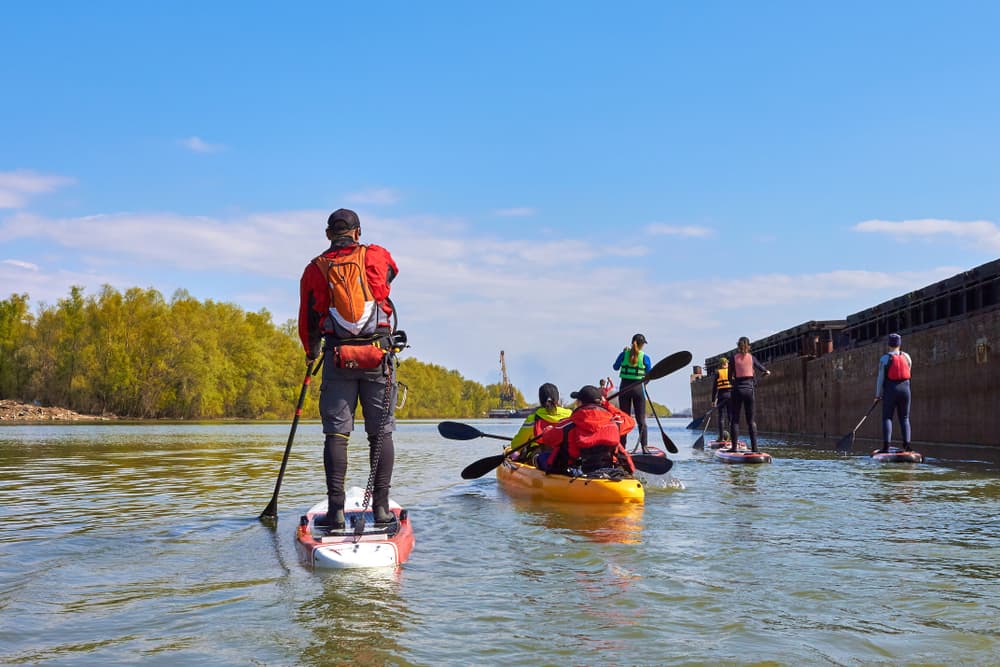
SUP boarding is the perfect summer beach day activity, but it’s also a watersport you can enjoy in other seasons. Spring can be an excellent time to take your SUP board out of storage to embark on various adventures. While this season offers rewarding paddling opportunities, there are several important safety tips you must remember whenever you paddle during this time of year.
Always wear your leash and PFD when paddling in the spring, and stick to sheltered coastal routes to avoid unpredictable extreme weather. Always dress for the cold water temperatures, and pack an extra set of dry clothes. Drop to your knees when winds and waves increase, and always pack a dry bag with essentials. Share your float plan, and find various beaches and launch locations for breaks along your route.
Spring is an excellent season for various paddling activities. Flowers are in bloom, wildlife is more visible, and there are far fewer crowds than in the peak summer months. There are, however, additional risks when you are paddling in this season. Before you grab your paddle and head to the water, ensure you read the list below of all the safety tips you must remember when SUP boarding in the spring.
10 Spring SUP Boarding Safety Tips To Remember
1. Dress For The Water Temperature
One of the most important tips for SUPing is to dress for the water temperature, not the air temperature. In the spring, water temperatures are usually significantly cooler than they are in the summer, especially if you live somewhere with cold winters.
Dressing for water temperature ensures you will always stay warm, and it significantly reduces your likelihood of experiencing hypothermia and other temperature-related ilnesses. Opt for insulating and quick-drying fabrics, since there is always a possibility you may take an unintentional swim when you’re SUP boarding.
2. Always Wear Your Leash And PFD
SUP boarding can feel like a care-free and whimsical activity, especially when you’re paddling from the beach and close to shore. There are, however, many ways you can injure yourself and run into trouble while SUP boarding. Wearing a quality PFD and SUP leash can significantly reduce your risk of injury on the water.
Spring is a season where these two safety items are more important than ever. You need fast reaction time when you fall into cold early-season waters. Your PFD and leash ensure you can quickly reach your SUP board and get to safety.
3. Check The Weather Beforehand
Spring is notorious for its unpredictable weather. While it’s always a good idea to check the forecast before you paddle, you must do so in the spring. Just because the sun is shining in the morning, it doesn't mean rough weather isn’t just around the corner.
Opt to paddle on days with no chance of rain and reliably mild wind. Paddling on days with optimal conditions is a great way to enhance your safety on the water.
4. Share Your Float Plan
Sharing a float plan with a reliable friend or family member is another great way to stay safe. Even when you take a short paddle, you should always detail your route and expected return time.
Providing this information to a trustworthy person on shore ensures help will be available if you find yourself in a precarious situation. Your float plan should include a map with your direction, launch locations, and your expected return time.
5. Choose Coastal Routes Whenever Possible
When you’re choosing the perfect paddling routes for your spring SUP adventures, you should try to stay close to shore whenever possible. When you paddle near the coast, it’s much easier to get to safety if you run into trouble.
Coastal routes are usually less windy, which makes it easier to stay balanced on your board, and usually means fewer waves. Remember to check wind direction before mapping out your route, as it can significantly affect water conditions on coastal routes.
6. Pack Your Dry Bag Thoughtfully
It’s always important to bring a reliable dry bag when SUP boarding, as these vessels provide minimal protection from water. In the spring, you must take the time to diligently pack your dry bag with essentials, especially given the increased safety concerns.
In addition to your electronics and first aid, consider bringing warm beverages or heating pads to help raise your temperature after an unintentional cold plunge.
7. Always Bring A Buddy
You should always try to find a paddling buddy to bring along with you on your journeys. Paddling with a buddy makes for a memorable experience, helps the time on the water pass more enjoyably, and increases safety.
Any time you paddle in the spring, when conditions are more challenging and potentially more dangerous, it's a good idea to paddle with a buddy or in a group. A buddy can help you out of a scary situation on the water, especially if the person has plenty of paddling experience.
8. Drop To Your Knees If Things Get Shaky
Falling into the water while SUP boarding is quite common, especially for a beginner. While falling into water can feel refreshing in the summer, it is a cold, potentially life-threatening experience when paddling in frigid spring waters.
To reduce the risk of falling into cold waters when SUP boarding this spring, you should always drop to your knees when it’s hard to keep your balance. High winds, choppy waters, and challenging routes can all make balancing more difficult than usual.
9. Bring A Dry Change Of Clothes
Any time you paddle in cold waters, a warm change of clothes is essential. Even if you’re taking a short journey, you must be ready for immersion and know how to warm up afterward. Any time you SUP board in spring when the water is still cold, you should bring a change of clothes in a dry bag.
Insulating and quick-dry materials like fleece are great fabrics for paddling. Remember to bring a quick-dry towel as well, to make it easier to dry off before changing.
10. Find Sheltered Places On Land For Paddling Breaks
Lastly, as you plan your early-season paddling adventures, remember to factor in plenty of breaks. Most paddlers aren’t in peak paddling shape in spring, which means it’s smart to take it easy, hydrate, and stretch throughout the route.
While you can take a break floating on the water, it’s safer to find beaches and other safe landing locations on shore. Shore breaks allow you to warm up, stretch, and completely relax, which is ideal for those getting back into peak paddling shape.
Related Articles

Embarking on a winter paddling journey has a serene and desolate charm all its own. There are fewer…

The autumn months usher in all the coziest things. It’s sweater weather, pumpkin spice season, and…

Credit: IZZ HAZEL Paddling on vacation checks a lot of boxes. On a kayak, canoe, or SUP board, you can…

The backbone of any paddle - the one structure that ties every part of the paddle together, from the…