
Innovo+ Challenger Review
Innovo+ Challenger Review
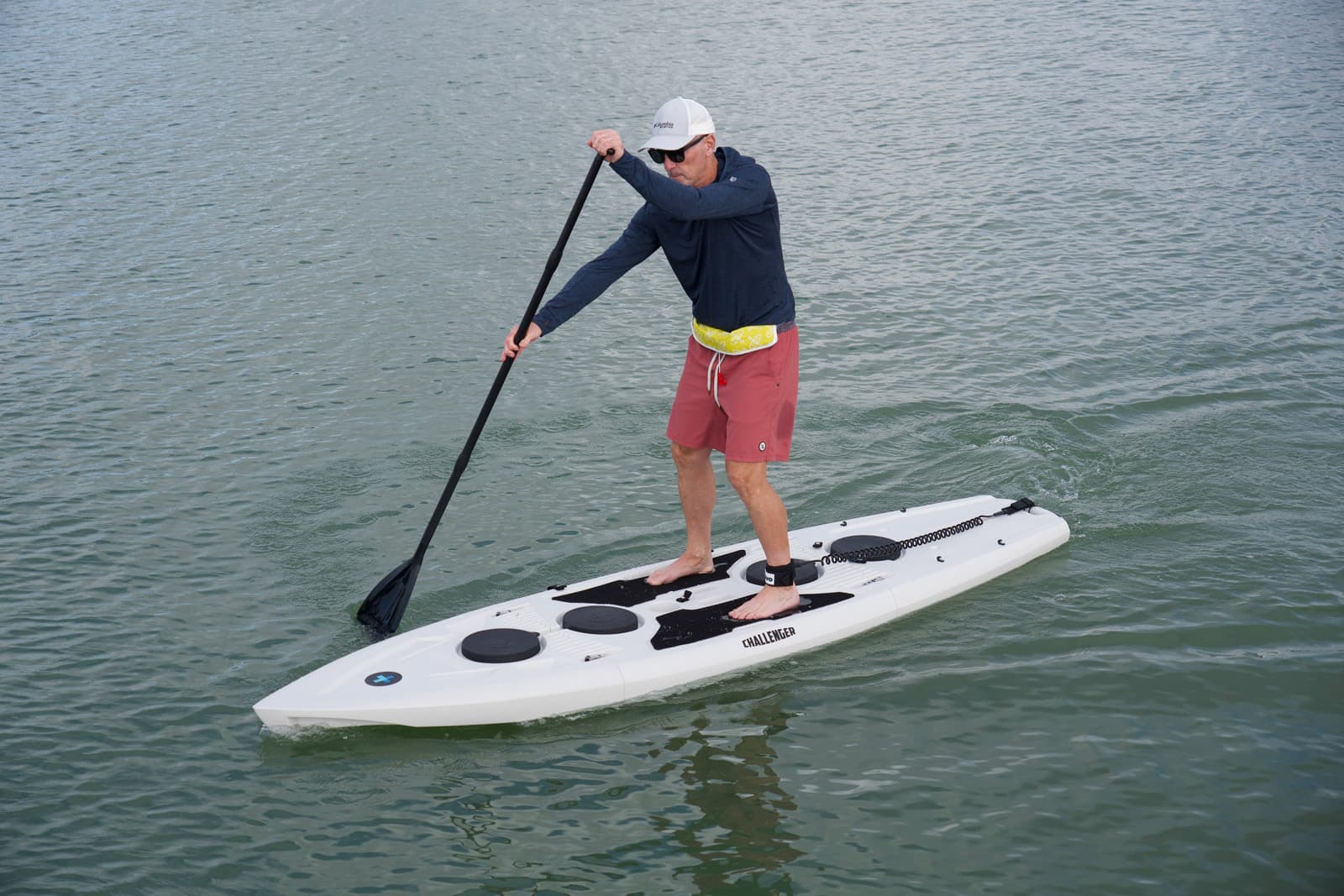
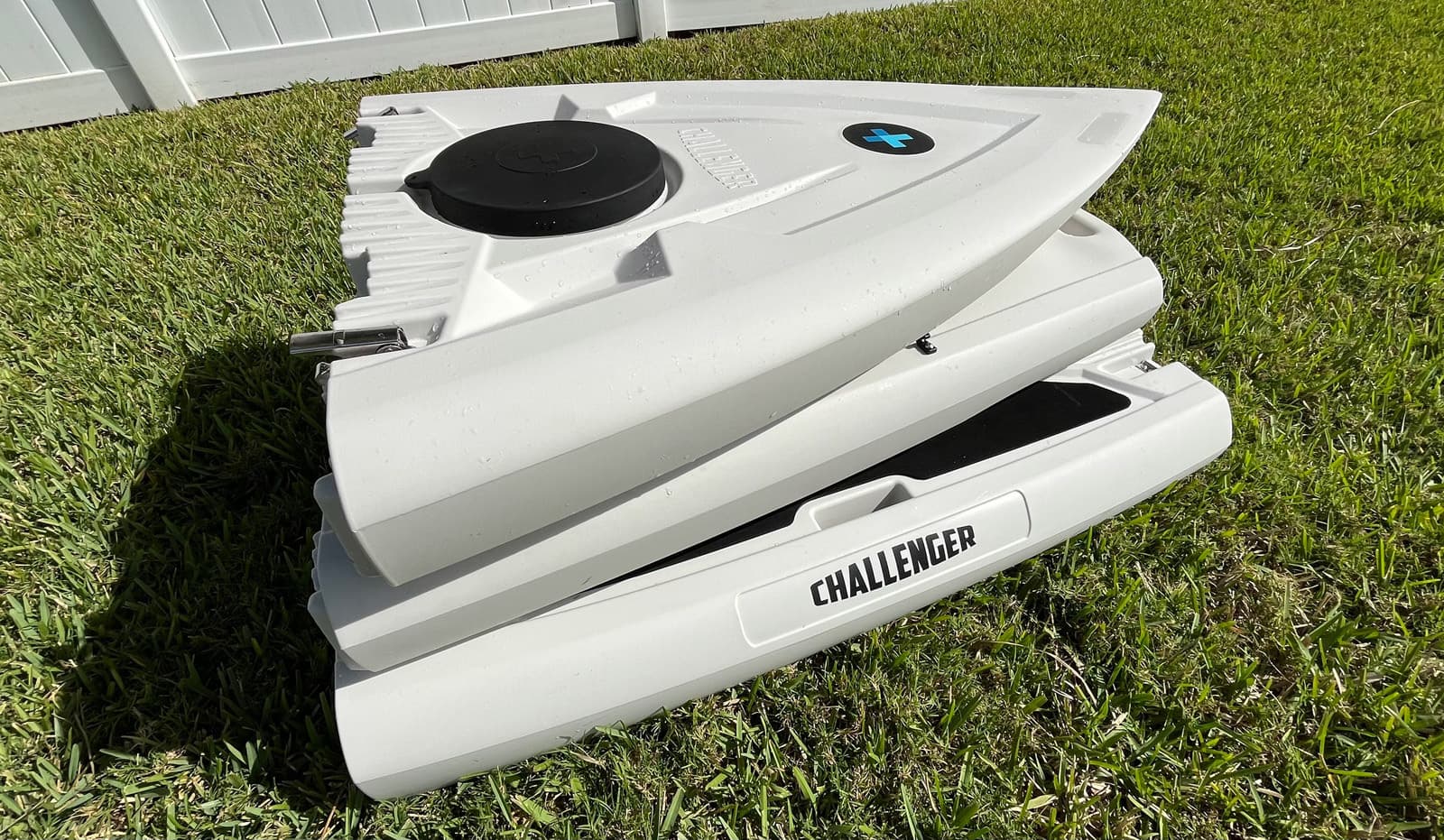
Standup paddleboards can be heaven out on the water, but a little hellish back on terra firma. Chalk much of it up to transportation and storage issues. Rigid boards are solid performers but will likely have to be transported atop your car. And good luck storing something taller than a basketball hoop in the average closet. Inflatables are far easier to transport and store, but the inflation/deflation routine every time you want to ride can be a hassle. Innovo+’s Challenger joins a very short list of SUPs offering a third alternative. Made from rotomolded, high-density polyethylene (HDPE), it separates into three sections for easy transport and storage, then locks together to create a rigid board once it’s time to ride.
The perfect solution? Let’s face it, none of them are. But depending on your circumstances, it just may be the best solution for you…and your living situation.
Here’s our take after spending some time with the Challenger both at home and on the water.
Some Assembly Required
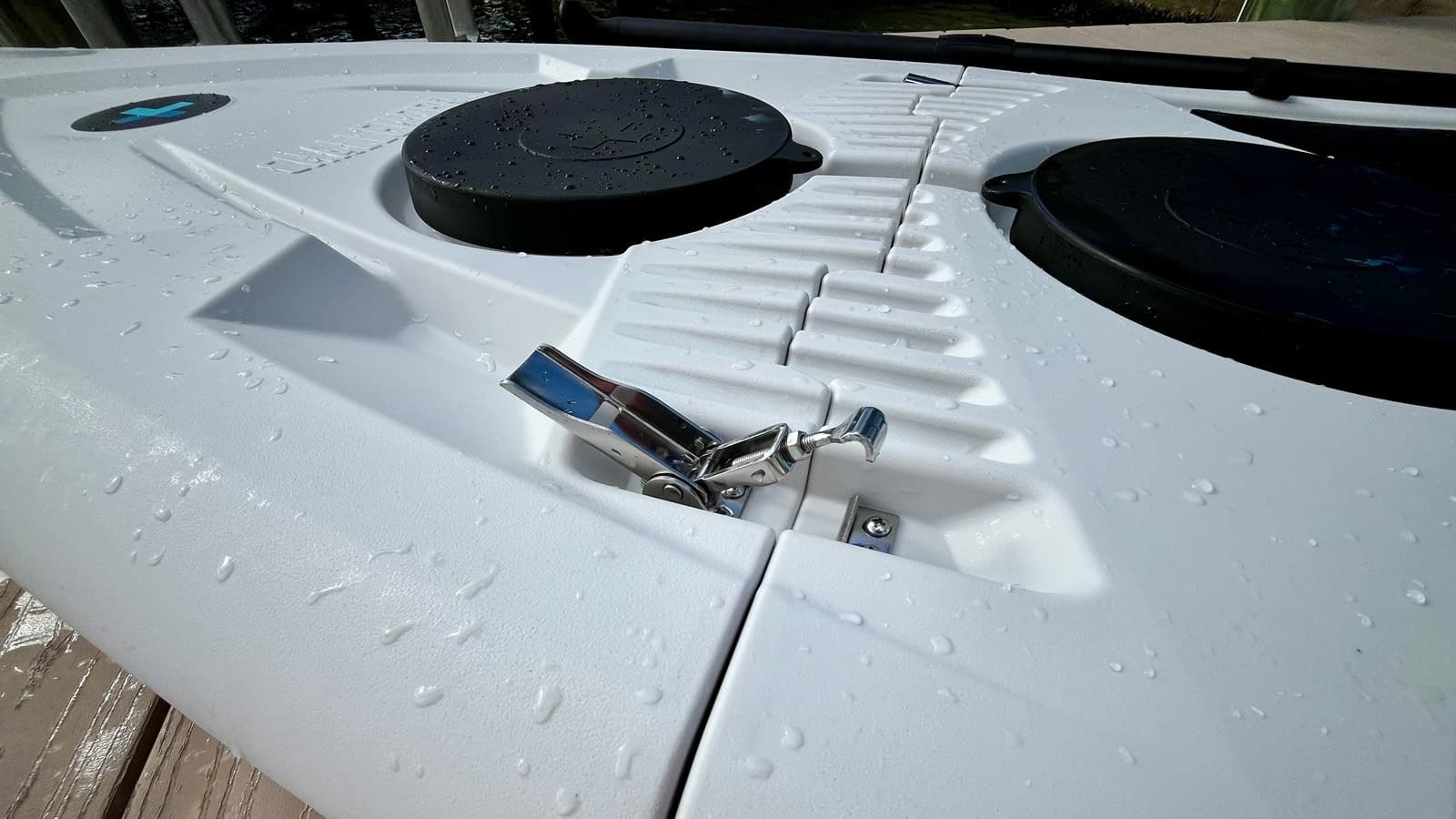
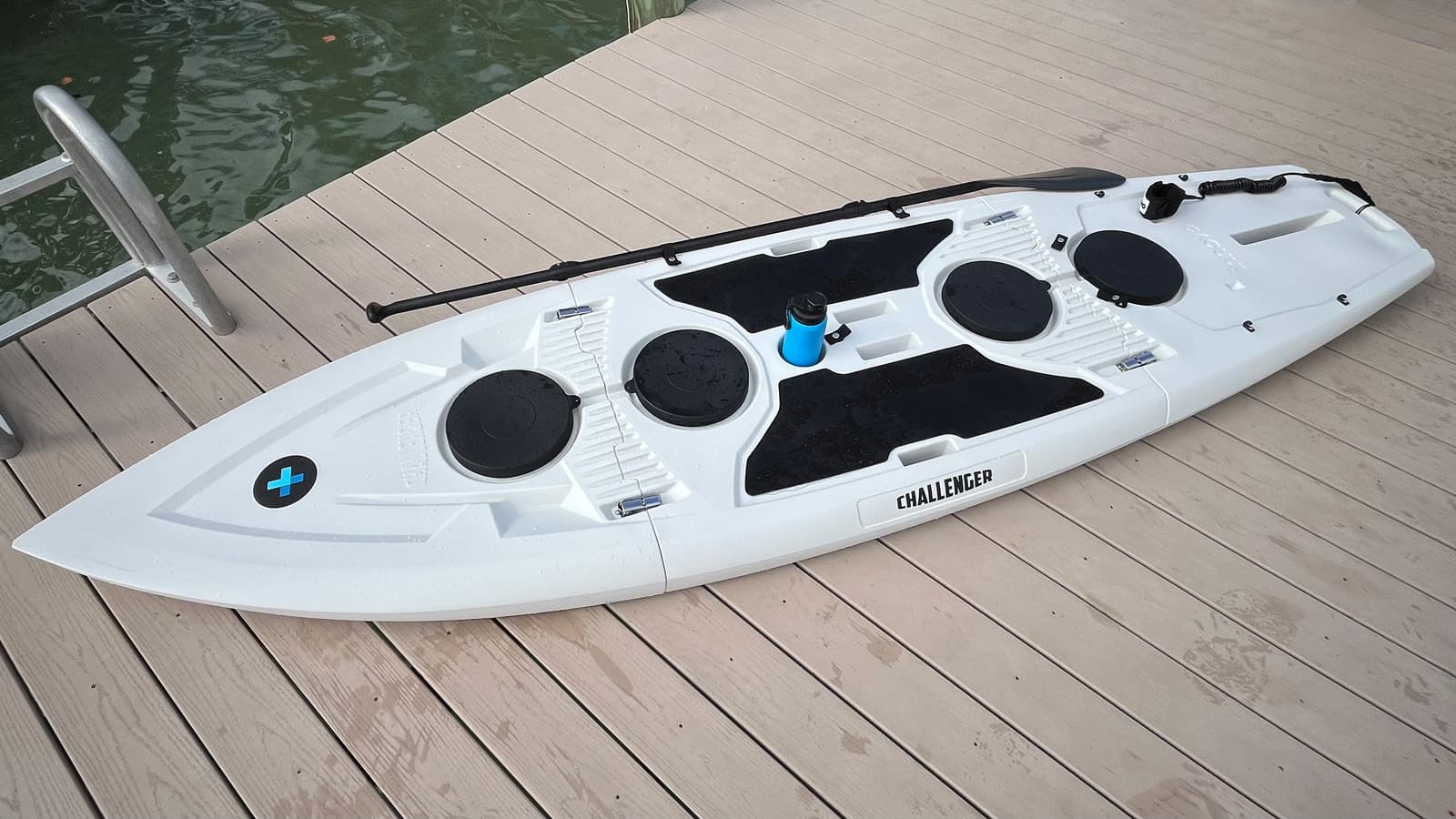
Assembly is surprisingly straightforward. Place nose, center and tail sections topside up, align shallow male tabs with female indents, then fasten 10 stainless steel latches to lock everything together. Tip? Close topside latches first, before flipping the board and doing likewise below, starting with center latches at each section before moving to outer closures.
As pieces effectively butt against each other in widthwise seams, there’s no need to muscle sections into place. Should latch tension ever need to be adjusted, a small 5/16” wrench is provided. Individual covers keep latches in the closed position when not in use and protect from damage or scratching. We’d suggest keeping a zippered bag on hand to keep them together, as you don’t want to lose them during assembly.
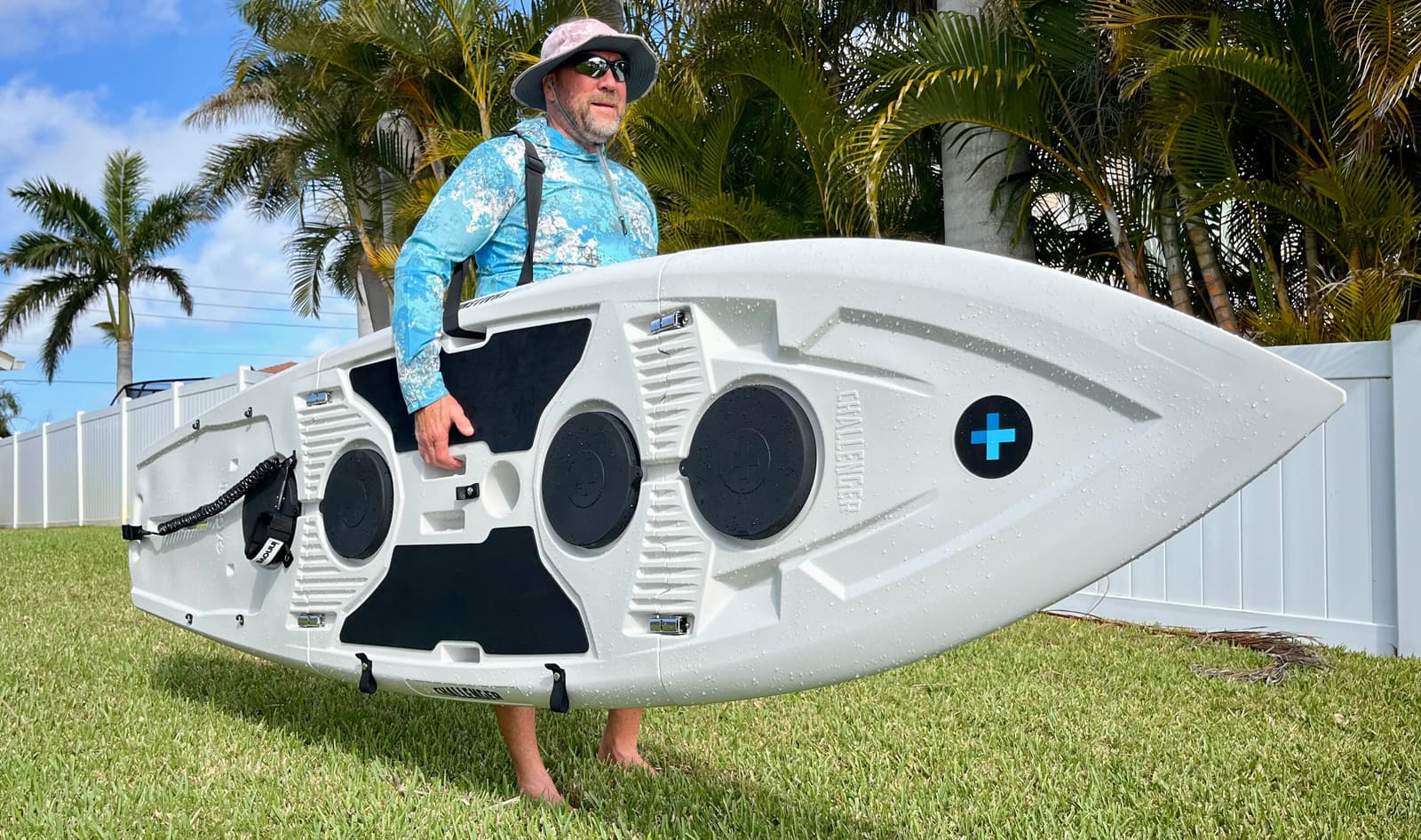
Though individual sections can be transported in a compact SUV or car with similar storage space, they weigh as much as 20 pounds for the largest center section. Once assembled, the completed board tips the scales at nearly 44 pounds. The modular sections make that weight far easier to manage than a single rigid board of similar size. (For comparison, the heaviest iSUPs typically top out a little over 30.) We found it easiest to carry sections as close to the water as possible before assembly. The included shoulder strap, passed through starboard or portside handles, allows a solo paddler to haul the assembled board the final steps to water’s edge. Once in the water, a single fin slides into place from the topside, eliminating the possibility of it being damaged during assembly or transport while enabling the paddler atop to remove it in extremely shallow waters or before beaching.
On The Water
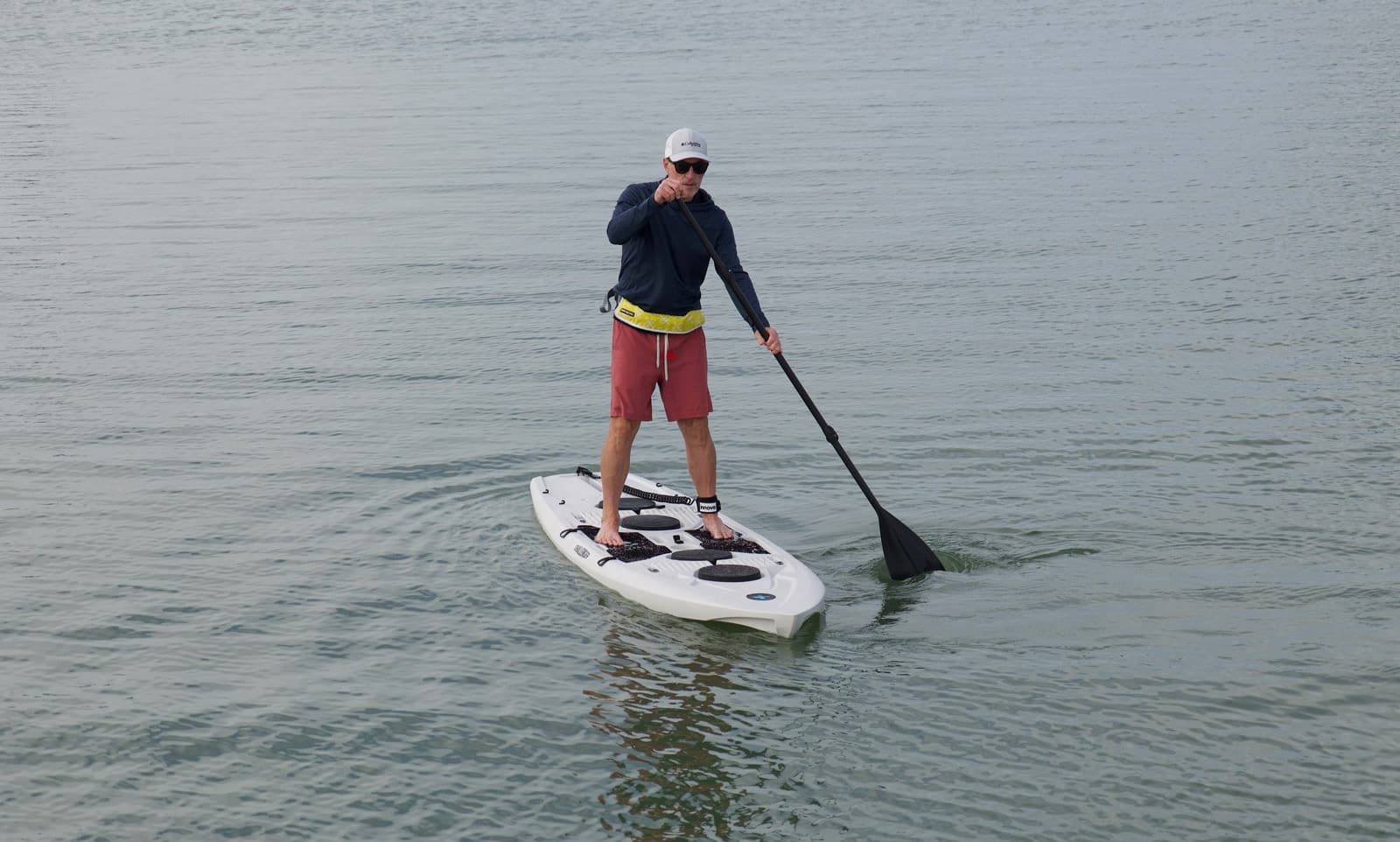
Underway, the obvious question was quickly answered. The Challenger feels like a paddleboard, not some pieced-together pretender. Sections stayed secure, leaving us with little worry about pieces separating. Take a few pulls and the hull glides through the water and generates decent speed. Sweep or reverse paddle and the board responds to directional changes with relative ease. Stability felt slightly different than traditional rigid or inflatable boards, requiring a bit more balance during aggressive paddling. The board feels slightly less buoyant than most, requiring a little more balance as well as more frequent course correction as chines can sink deeper during more aggressive paddling and influence the board’s path. Individual 30” traction pads are comfortable underfoot, though paddlers who like to shift their stance may wish the pads extended a bit farther fore or aft. With a relatively flat profile, we occasionally found ourselves wanting to get farther back on the board, especially in rougher waters when waves can come over the bow.
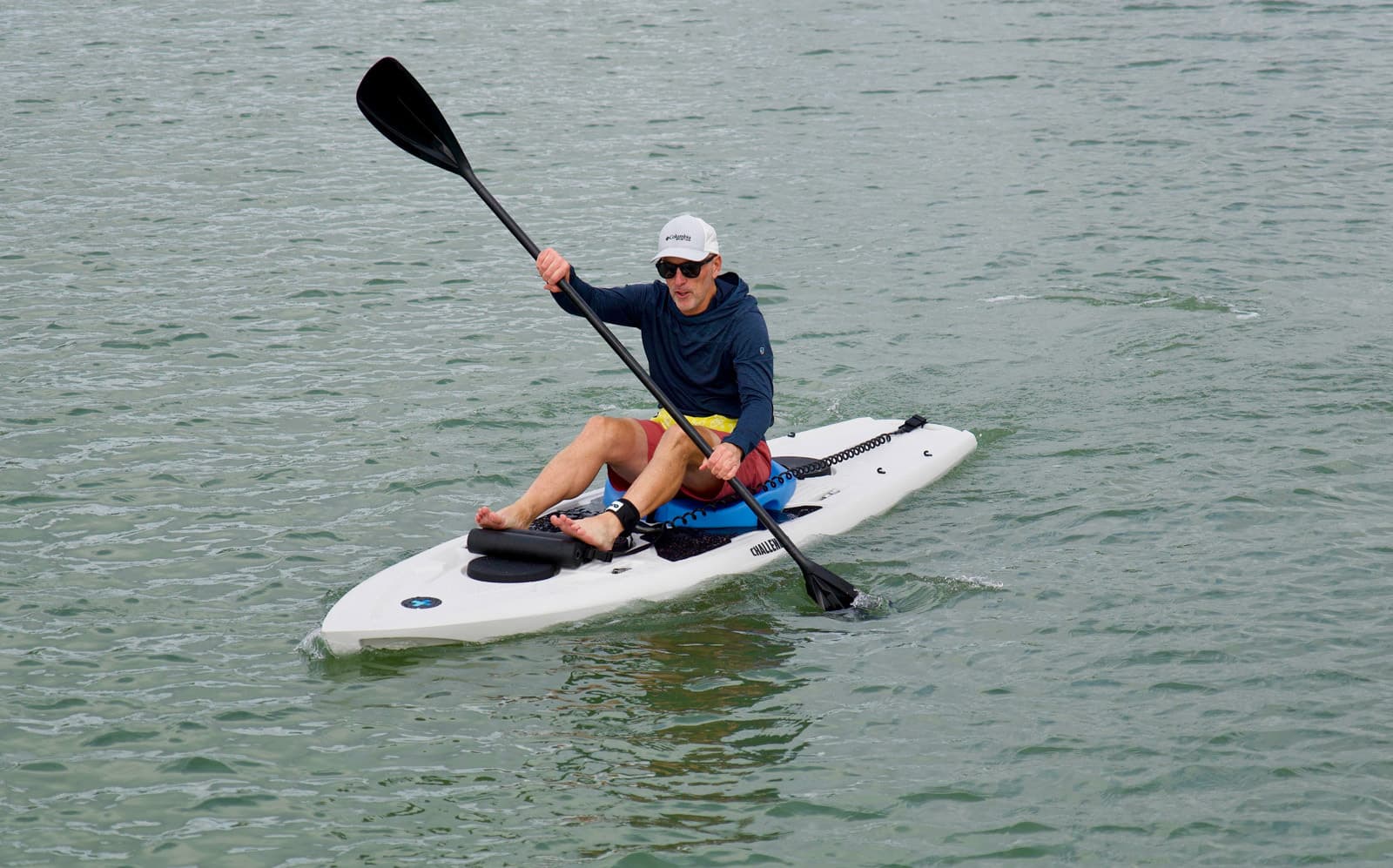
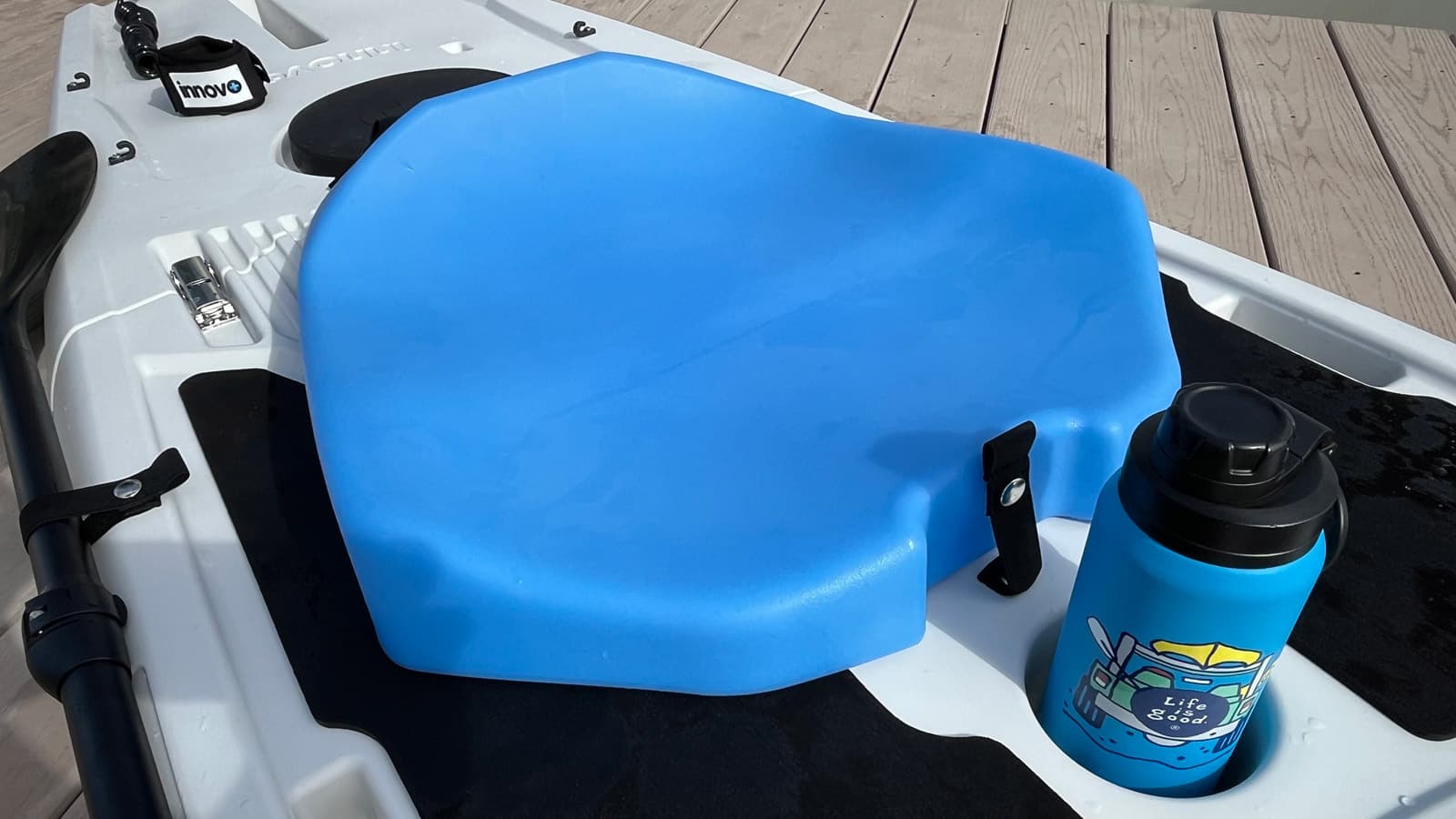
That tendency wasn’t nearly as evident in kayak mode, likely due to the lower center of gravity and less side-to-side wobble. The rotomolded seat slots into topside indents and secures via a trio of tethered snaps, an adjustable footrest helps you brace and generate more power while seated. We found its molded contours more ergonomic than the flat inflatable seats on most hybrids, eliminating some concerns about the absence of cushioning, but back support would be nice for long sessions. Like other hybrids, an additional blade replaces the handle to create a double-bladed paddle. In SUP or kayak mode, a pair of snap straps along the righthand side of the board secures the paddle when you want to take a rest or dip in the water. A molded-in cupholder between the footpads keeps a water bottle readily at hand.
A notable advantage to the construction method is storage. Four 9” round openings are molded into the topside, each covered with a snug-fitting rubber cap to keep water at bay. The wide-open interior of each section can gobble up far more gear than you’d typically carry on most SUPs (think clothes, towel, snacks, sunscreen, etc) and the interior positioning avoids deck clutter. Smaller items, however, can slide out of reach when carrying or encountering rough water. We’d suggest dry bags or similar for vital items like keys and wallet to keep them close at hand and trying to stuff between top and bottom to avoid hunting. Hooks are provided on the tail section should you wish to add an optional net or bungee.
Back At The Dock
Other aspects of the Innovo+ Challenger worth consideration include HDPE’s advantage when it comes to durability. Pull the board onto shore, bang into a dock or slip while loading and unloading and odds are it comes out no worse for wear. Though it’s best not to leave the Challenger sitting for extended periods in the sun, the construction material and method are also not prone to an inflatable’s heat expansion (and the popped seams that can follow) or a rigid board’s possibility of delamination or internal pressure buildup.
Storage lids keep water out, but they’re not tethered; be careful not to lose one out on the water. Paddle blades are also quite flexible and lack spring-lock buttons to mate with the shaft to aid in alignment or prevent slippage. Of course, their absence allows you to tweak blade angles to preference, especially helpful when kayaking.
Realize the Challenger also comes in one size. At 10’ 2” in length and 32” in width, we’d recommend it for riders up to 5’ 10” and 180 pounds. While rated for riders up to 230 pounds, heavier paddlers may find the board performs best with lighter overall weight.
Overall, however, we found the Challenger to be well made and offer the storage and transport advantages that Innovo+ promises. Yes, it’s got its limitations as all paddleboards do. But with the Challenger, none of them include having to haul the board atop a car, struggling to find a place large enough to stow, or inflating and deflating every time you want to ride.
For the right customer, that might make all the difference.
Related Articles

Retrospec positions the 11’ 6” long, 32” wide Weekender Tour for the recreational,…