
When Is It A Good Time To Introduce A Child To Paddling?
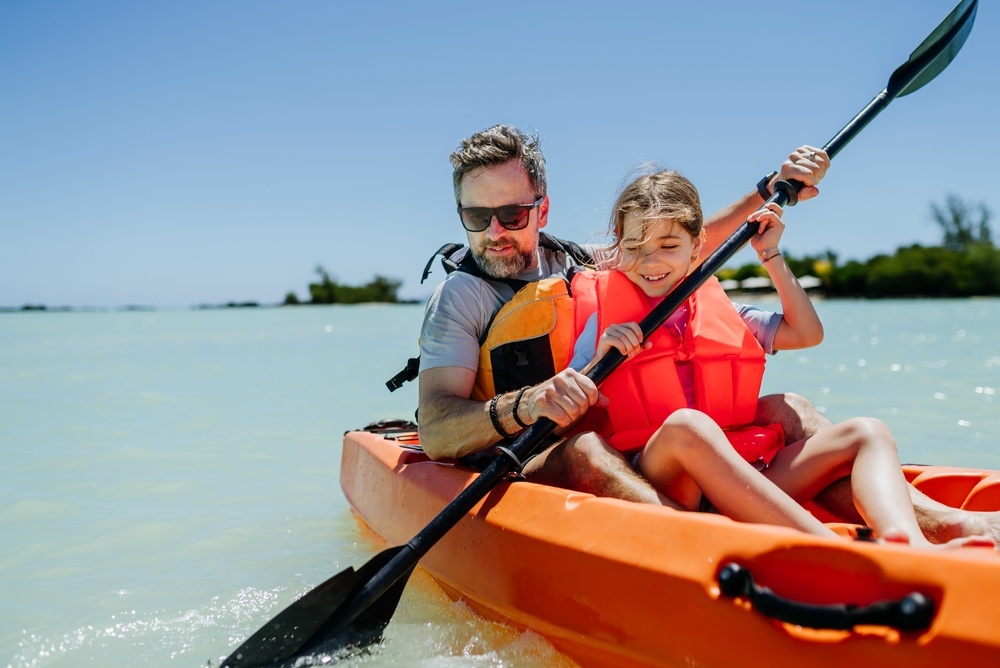
For paddlers with children, there is arguably no greater joy than teaching a child how to paddle. Watching the inevitable wonder and amazement on your child’s face as they learn how to use a paddle and handle a kayak, canoe or paddleboard is a memory you’ll cherish forever. It’s natural to have a strong desire to share these memories with your kids, but you must ensure your child is ready to begin paddling.
Children mature at different rates, and while many suggest you can introduce your child to paddling as early as four or five years old, you must consider several factors before first. Your child should know how to swim and have no fear of water. Ensure they can follow instructions, especially in emergencies, and confirm that they are interested in paddling.
Show them the paddling basics on shore, then start with your child sitting in front of you in your kayak, canoe or on your paddleboard. Safety equipment and properly-sized gear are essential. Bring delicious paddling snacks and think of games you can play to keep your child engaged on longer journeys.
While you might be eager to introduce your child to theactivity you love, you must remember that one traumatizing experience on the water can completely turn your son or daughter off to paddling. Therefore, you must determine when the right time is to bring your kid along on your next journey, and you should also know the top tips to keep in mind when introducing a young child to this activity.
Factors That Determine If Your Child Is Ready To Start Paddling
1. Can Your Child Swim?
One of the first questions you need to answer when determining if a child is ready to paddle is whether they can swim. While you don’t need to be a swimming expert to paddle, there should be a basic level of comfort in the water.
If your child has never taken a swimming lesson or dipped into the ocean with a life jacket, then you should consider these activities before you start paddling with them. When a child is comfortable on (and in) the water, they are more likely to enjoy paddling.
2. Are They Comfortable in and Around Water?
Some children, for one reason or another, have a fear of water, especially large bodies of water. Children who can’t swim or have had a traumatic water experience can develop a strong fear of water that they must overcome before paddling.
Before you take a young child on a paddling adventure, ensure they show interest and are comfortable on the water. If you notice apprehension or fear once you launch your vessel, head for shore and consider waiting a bit longer to introduce your child to paddling.
3. Do They Have A Genuine Interest In Paddling?
One key attribute you should look for in your child before bringing them along in your kayak, canoe, or SUP board is a genuine interest in the water sport. Your child should want to accompany you and must express this interest beforehand.
Never drag your kid on the water against their will, as this is almost certain to backfire. Find ways to make paddling more interesting to your child, as the more excited they are to accompany you, the more successful the maiden journey is likely to be.
4. Does Your Child Follow Directions?
Arguably, the most important factor to consider before you take a young child paddling is behavior and maturity. Every parent wants a child who listens and follows instructions, but these traits are imperative when you take a child on the water.
If your youngster is still stubborn and prone to distraction, consider waiting a bit longer before taking them on your paddling vessel. You need your child to listen to instructions, as the wrong actions can have serious consequences, even in tranquil waters.
5. Will They Paddle With You or On Their Own?
Lastly, you must understand that bringing a child along on a tandem vessel as a passenger is very different from allowing your kid to paddle independently on a separate SUP board or kayak. You can take a young child along for a ride in a tandem vessel, but very young children might not have the motor skills, strength, and interest to paddle independently.
Take your child on multiple journeys on a tandem vessel before you allow them to paddle next to you in a separate board or boat. Ensure your child expresses an interest in paddling independently, as this is a decision they should make for themselves.
Seven Tips To Remember When Introducing A Child To Paddling
1. Have The Correct-Sized Gear
Having gear that suits your body size is always crucial. Therefore, you must ensure your youngster has a suitably-sized paddle and accessories. Purchase a paddle that corresponds to your child’s height.
A lightweight, adjustable paddle is ideal, as it will be easier for a young child to hold and can grow as your child gets larger.
2. Ensure Your Child’s Life Jacket Still Fits
Just as children constantly need larger clothes, they also require a new PFD from time to time. Every child needs to wear a life jacket with a legible label indicating it’s approved by the U.S. Coast Guard or an equivalent international agency. These PFDs are essential for all paddlers, but especially for children learning to swim and still becoming comfortable in the water.
3. Bring Tasty Treats And Snacks
Children are notorious for short attention spans. Your youngster might be excited to get on the water, but might become bored or start complaining minutes later. To combat these mood swings, always keep delicious paddling snacks on hand.
Not only will snacks give your child more energy, but they can also prevent temper tantrums and keep your young children well-behaved when they’re on the water.
4. Start Them In Front On A Tandem Vessel
One of the best ways to slowly get your child comfortable on a paddling vessel is to start them off in the front seat of your tandem vessel. Before they even pick up a paddle, allow them the chance to ride around and experience the joy and tranquility of floating in a paddling vessel.
Not only does this provide baby steps towards paddling, but it also helps teach your child balance and other paddling safety basics.
5. Practice On Land Beforehand
Another great way to ensure your child is prepared to paddle at a young age is to teach some paddling basics on land. Your child should know how to enter and exit a kayak safely, and you can practice a capsize recovery plan on land and then in shallow waters.
Once your child is ready to pick up a paddle, you can teach the correct way to hold and stroke the paddle on land, and then conduct a brief lesson in the water.
6. Opt For Calm And Protected Waters
As a general rule, you should avoid deep water and open ocean paddling with a young child, even if they are a strong swimmer. Instead, you should plan paddling routes in shallow and protected waters. Placid bays and sheltered lakes are a great place to start.
Over time, you can venture into more ambitious conditions, but you must start in the safest and calmest conditions possible.
7. Begin With Swimming Lessons To Instill Confidence
Your child is far more likely to feel safe and confident in a paddling vessel if they can swim. Those who can’t swim are often nervous, or even terrified, on the water. While you might be eager to get your child in your kayak or canoe sooner rather than later, you should consider a season or two of swimming lessons before you take them on their maiden voyage.
Related Articles

Paddling hazards can come in every form you can imagine, and you often can’t see the most dangerous…

Photo by Desintegrator, Shutterstock. For many adult paddlers, a cold beer or delicious cocktail is the…
Photo by: Dmitri T, Shutterstock Regardless of whether you’re an expert paddler with decades of…

I’ve been on paddling tours all over the world, from New England to the Galapagos Islands. While every…